
How to Comply with EU Methane Regulation 2024/1787 for European Midstream and Downstream Operators
The landscape of energy operations in Europe has fundamentally shifted with the entry into force of EU Regulation 2024/1787, a landmark framework for the reduction of methane emissions. This regulation applies not just to upstream oil and gas production but also directly impacts midstream and downstream operators, including those in gas transmission, distribution, and processing. For these companies, compliance is no longer a best practice, it is a mandatory legal obligation backed by the threat of severe penalties, including fines of up to 20% of annual turnover.
This article outlines the key requirements of the regulation and provides a clear roadmap for achieving and maintaining compliance.
Key Regulatory Obligations and Deadlines
The regulation introduces strict new rules that require a fundamental shift from estimated emissions to measurement-based reporting. The core obligations for midstream and downstream operators are:
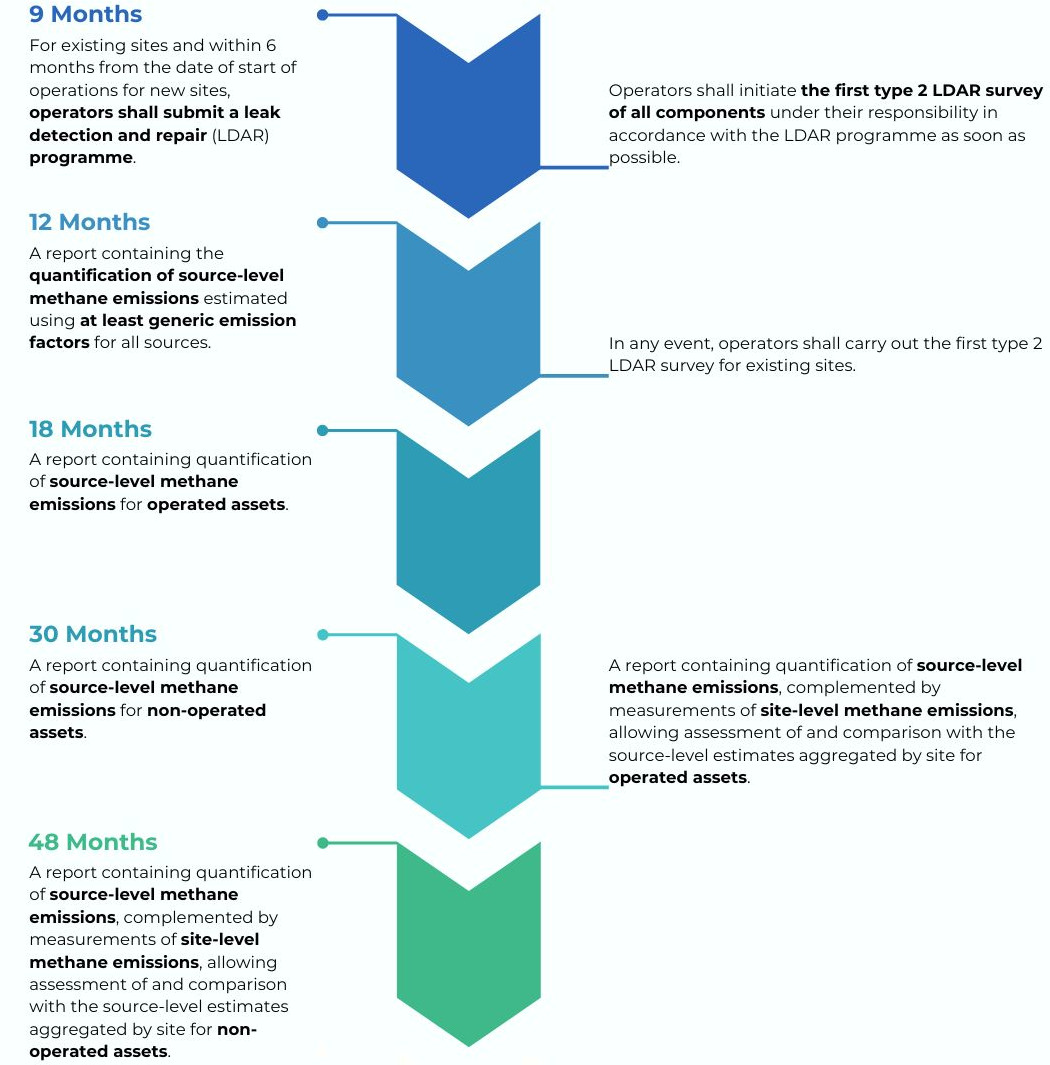
–Mandatory Monitoring, Reporting, and Verification (MRV): You must quantify methane emissions at both the source and site level. This goes beyond simple estimates and requires a robust system for continuous or frequent measurement. The regulation aligns with the OGMP 2.0 “Gold Standard,” pushing operators toward measurement-based reporting. Annual emissions reports must be submitted to national authorities.
–Leak Detection and Repair (LDAR) Programs: A comprehensive and proactive LDAR program is now mandatory. By May 5, 2025, operators must submit a detailed LDAR program to competent authorities. The program must include a schedule for frequent surveys—at least twice per year—with an encouraged shift toward quarterly monitoring for greater efficiency.
–Strict Repair Timelines: Once a leak is detected, the clock starts ticking. A first attempt at repair must be made within 5 days, and the final repair must be completed within 30 days unless there are documented safety or technical limitations.
–Ban on Routine Venting and Flaring: The regulation largely prohibits the routine venting and flaring of methane. Flaring is only permitted for safety reasons or emergencies and must be conducted with a high destruction and removal efficiency of at least 99%. This ban becomes fully applicable on February 5, 2026.
A Step-by-Step Roadmap to Compliance
Effective compliance requires a strategic and systematic approach. Here is a practical roadmap for midstream and downstream operators:
Step 1: Conduct a Comprehensive Emissions Assessment
Before you can fix leaks, you need to know where they are. Begin with a thorough, site-wide assessment to establish a baseline of your current emissions. This “gap analysis” should identify all potential sources of methane and other emissions across your entire network, including compressors, valves, and pipelines. This initial assessment will inform the design of your LDAR program.
Step 2: Implement a Measurement-Based LDAR Program
The regulation’s emphasis on measurement requires abandoning outdated estimation methods. The best practice is to deploy advanced technologies that can quickly and accurately detect and quantify leaks across a wide area. Mobile emissions monitoring, using sensors on drones or vehicles, is an ideal solution. This approach allows for rapid, precise surveys of extensive pipeline networks and facility sites, providing the measurement data needed for reporting and verification.
Step 3: Enhance Data Management and Reporting
Effective compliance hinges on a robust data system. You need a centralized platform to manage the vast amount of data collected from your LDAR program. This system should be able to:
-Track the location and volume of all detected leaks.
-Record and report repair activities and timelines.
-Generate the detailed, source-level reports required by national authorities.
This shift from manual spreadsheets to dedicated MRV software is essential for ensuring accuracy, maintaining a verifiable audit trail, and meeting regulatory deadlines.
Step 4: Optimize Operations and Process Improvement
Compliance should not be seen as a mere burden but as an opportunity for operational excellence. The real-time, measurement-based data you collect provides invaluable insights into process inefficiencies and gas losses. By analyzing this data, you can optimize your operations, reduce lost product, and improve overall efficiency. The ability to monitor emissions under different operational loads is key to proactively preventing leaks and minimizing the need for flaring.
Partnering for Compliance
For midstream and downstream operators, achieving compliance with EU Regulation 2024/1787 can seem daunting. The key is to partner with a service provider that offers the advanced, measurement-based technology required by the new rules. Solutions like Aeromon’s mobile emissions monitoring provide the precision and efficiency needed to conduct comprehensive LDAR surveys, verify repairs, and generate the data necessary for compliant reporting. This enables you to not only meet regulatory deadlines but also to demonstrate a commitment to environmental stewardship and operational excellence, avoiding significant fines and strengthening your market position.

Interester in learning more? Read more about Aeromon’s services to the energy industry here: https://aeromon.io/industries/oil-gas/.